EV Charger Installation in St. Louis
Fast Level 2 home charging installations, panel load calculations, and custom underground conduit routing.
Reliable Home EV Charging Solutions
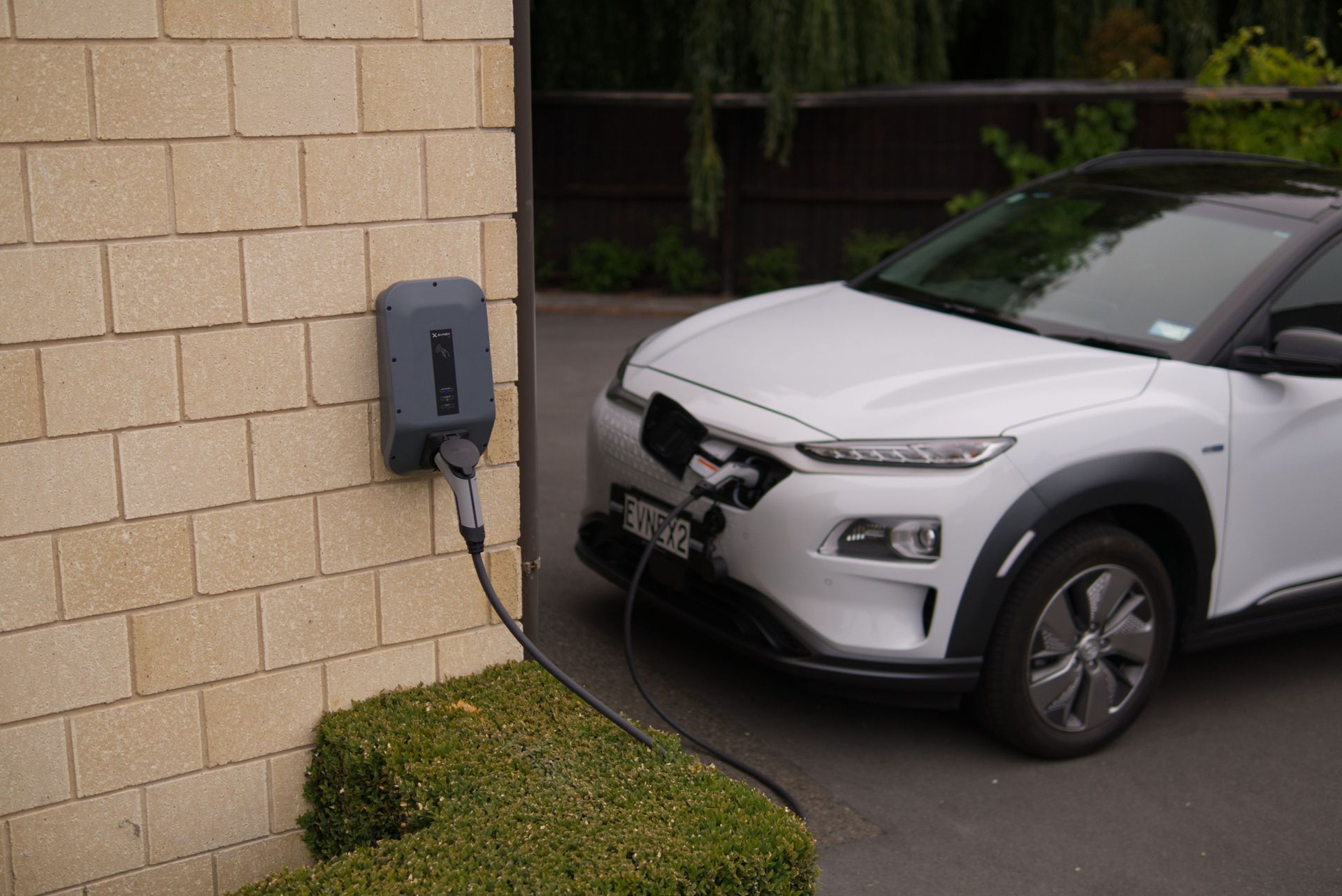
Charging your electric vehicle on a standard 120-volt wall outlet adds only a few miles of range per hour, which means it can take over a full day to achieve a complete charge. This slow charging process may be convenient in some situations, but it’s not ideal for everyday use, especially for those with busy schedules. In contrast, installing a dedicated Level 2 EV charging station significantly enhances your charging experience, powering your vehicle up to seven times faster and ensuring you have a full battery every morning, ready for whatever your day brings.
At Central West End Electric, we expertly handle every phase of your home charger setup, starting with precise panel load calculations to ensure your system is efficient and safe, as well as obtaining the necessary utility permits. Our team is skilled in executing heavy-gauge wire runs to support robust charging capabilities. Whether your charger is designed to be mounted inside a garage or if it requires trenching for underground conduit that reaches out toward a driveway or curb, we are committed to delivering clean, safe, and high-capacity charging setups that are meticulously tailored to suit your specific property needs. Our goal is to provide you with a seamless and reliable charging solution that enhances your electric vehicle experience.
Dedicated 50A–100A Circuit Wiring
We run heavy-duty 240-volt dedicated lines direct from your main breaker panel to support 40-amp, 50-amp, or high-output 80-amp EV chargers without overloading home circuits.
Panel Load Calculations & Upgrades
Our technicians calculate your home's total power consumption to ensure your electrical panel can safely handle a new high-voltage vehicle charger line.
Trenching & Underground Conduit Routing
For detached garages or parking areas near driveways and streets, we execute underground trenching and conduit installation to deliver weatherproof power right where you park.
Custom Driveway & Underground Installation Capabilities
Specialized conduit routing for detached garages, driveways, and street-side parking.
Trenching & Underground Piping: When your main electrical panel is located in the main house but your vehicle parks in a detached garage or along a driveway, we dig dedicated trenches to lay direct-burial schedule 80 PVC conduit safely underground.
Driveway & Sidewalk Navigation: We carefully route electrical lines beneath or around existing concrete walkways and driveway pavers, preserving your landscaping while establishing continuous high-voltage power lines to your parking spot.
Weatherproof Outdoor Pedestals: For exterior parking pads lacking adjoining structural walls, we install free-standing, weather-sealed metal pedestals engineered to withstand St. Louis rain, snow, and summer heat safely.
EV Charger Installation FAQs
Do I need a 200-amp main panel to install a Level 2 EV charger?
Not always. While a 200-amp panel provides optimal capacity for high-draw chargers, a technician can perform a load calculation on a 100-amp or 150-amp panel to determine if it can safely support a 30-amp or 40-amp charging circuit. If overall demand is too high, a panel upgrade may be recommended.
What is the difference between NEMA 14-50 plug-in chargers and hardwired EV chargers?
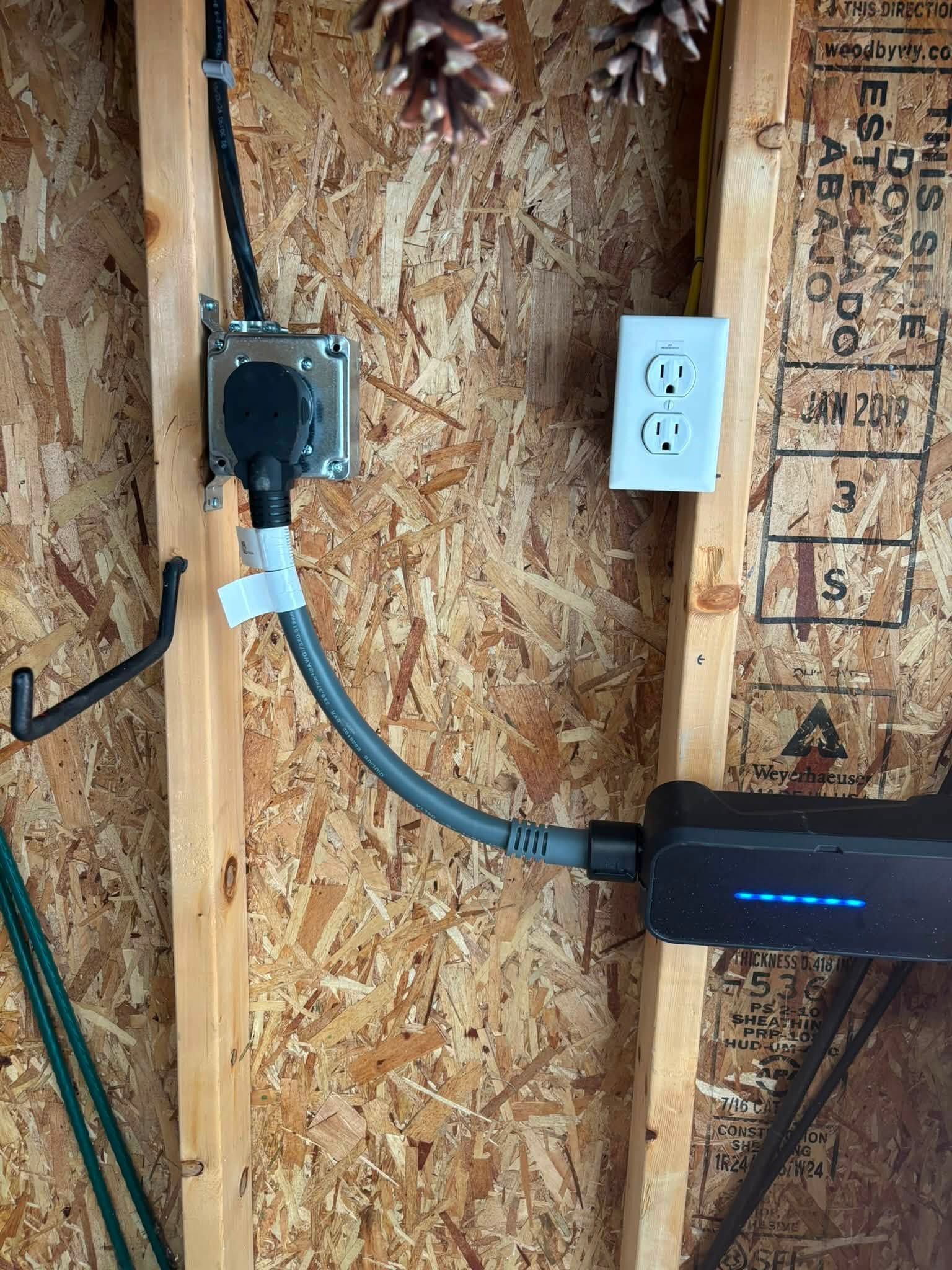
A NEMA 14-50 plug connects into a dedicated 240V outlet and caps charging output at 40 amps (using a 50A breaker). A hardwired EV charger connects directly into your home’s electrical wiring without a plug, allowing continuous output up to 48 amps or higher for faster vehicle charging.
Can you install Tesla Wall Connectors as well as universal chargers for other electric cars?
Yes, we install Tesla Wall Connectors, Tesla Universal Chargers, ChargePoint Home Flex, JuiceBox, Emporia, and all major Level 2 EVSE units for Tesla, Ford, Chevrolet, Hyundai, BMW, and foreign or domestic EV makes.
Do I need a municipal electrical permit for EV charger installation in St. Louis?
Yes, adding a dedicated 240-volt high-voltage circuit and wall charger unit in St. Louis City or St. Louis County requires an electrical permit and a local code inspection to verify wire gauge sizing and breaker safety.
How do you run power to an EV charger if I have a detached garage or outdoor parking pad?
We dig underground trenches from your home's electrical service entrance out toward your detached garage or outdoor parking area. Heavy-gauge wiring is enclosed inside protective rigid PVC conduit to bring weather-resistant high-voltage power right next to your parking space.